

2025 Washington State Tax Changes: What You Need to Know
WA capital gains now hit 9.9% above $1M, and the estate tax exemption rises to $3M with a top rate of 35%. Here's what changed and how to plan around it.


2025 Washington State Tax Changes: What You Need to Know
Trey Gevers CFP® | May 23, 2025
Washington State has passed significant tax law changes that could impact your long-term financial plans—especially if you're a high-income earner, hold appreciated stock, or have a sizable estate.
Here’s a breakdown of the key changes and smart strategies to consider.
Capital Gains Tax Just Got More Expensive for High Earners
If you own appreciated stock, this change is particularly important:
What Changed:
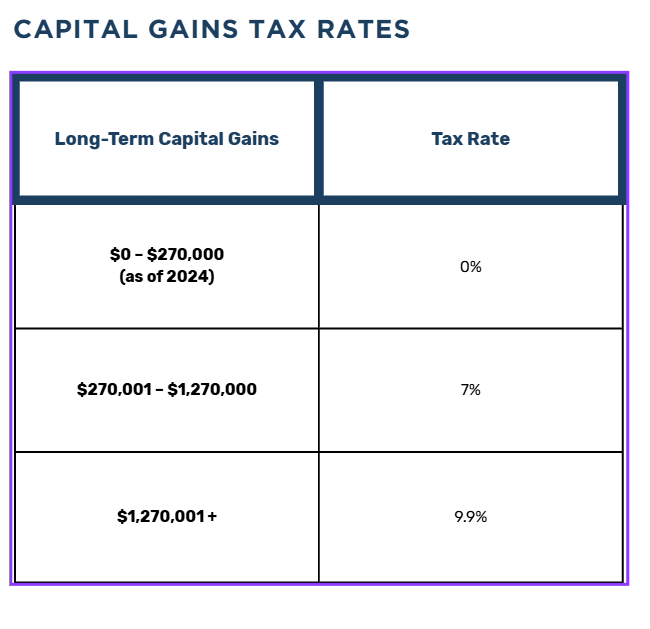
- Washington already imposed a 7% tax on long-term capital gains over $270,000. (2024 Inflation adjusted exemption amount)
- Now, a new 2.9% surtax applies to net gains above $1 million, bringing the top rate to 9.9%.
- The new surtax is retroactive to January 1, 2025.
What’s Still Exempt:
- Real estate
- Retirement accounts (IRAs, 401(k)s)
- Small business sales (qualified)
- Certain livestock, timber, and goodwill sales
Here are the new tax rates:
Estate Tax Changes
What Changed:
- The estate tax exemption increases to $3 million on July 1, 2025, and will be indexed to inflation going forward.
- However, the top tax rate increases to 35% for estates above $9 million—the highest of any U.S. state.
Here are the new estate tax rates:

If your estate is worth $10 million, $7 million of that may be taxable in Washington. At a top rate of 35%, that’s a potential $1.33 million estate tax bill.
Strategies to Reduce Tax Exposure
Strategic planning just became even more critical for Washington families. Here are some strategies to consider utilizing to promote an intelligent financial life
1. Tax Gain Harvesting (Yes, You Read That Right)
If you have appreciated stock but are under the $1M gain threshold, consider harvesting gains strategically over time to reset your cost basis.
2. Tax Loss Harvesting
Sell underperforming investments to realize losses that can offset current or future capital gains – Direct Indexing is a great way to automate this.
3. Charitable Giving with Stock
Donating appreciated stock allows you to:
- Avoid capital gains tax
- Receive a full-value charitable deduction
- Free up cash while supporting causes you care about
4. Installment Sales
Spreading a large gain over multiple years (if possible) can help you avoid crossing the $1M surtax threshold in a single year.
5. Trust Planning for Estate
Use tools like:
- QTIP Trusts – to defer estate tax at a spouse’s death and maintain control over distribution.
- Disclaimer Trusts – to allow post-death planning flexibility based on tax laws at that time.
- Irrevocable Nongrantor Trusts – to move appreciating assets out of your estate and potentially avoid WA capital gains tax altogether.
What Should You Do?
Tax planning isn’t just for April. These changes make it even more important to evaluate your investment strategy and estate plan. We recommend:
-Reviewing your portfolio for concentrated stock risk
-Revisiting your estate plan if your net worth exceeds $3M
-Mapping out stock sales or liquidity events for tax efficiency
Let’s Talk
Our team at Gevers Wealth Management is ready to help you navigate these changes. Whether you’re considering a stock sale, revising your estate plan, or gifting assets, we can help you create a customized strategy that fits your goals and keeps more money in your pocket.
Schedule a call today to update your financial plan for 2025 and beyond.
Trey Gevers CFP®
Trey Gevers is a CFP® professional and partner of Gevers Wealth Management in Issaquah, WA, where he helps retirees and pre-retirees build financial plans they can actually live on.
Continue Reading
Discover additional articles to help you stay informed and make thoughtful financial decisions over time.






























Book a Free Assessment Today
Set up a relaxed, no-pressure call to talk through your situation, your goals, and what comes next.
Our calls are always stress and pressure free—guaranteed!